
Advanced Search
Submit Manuscript Advanced Search
Submit Manuscript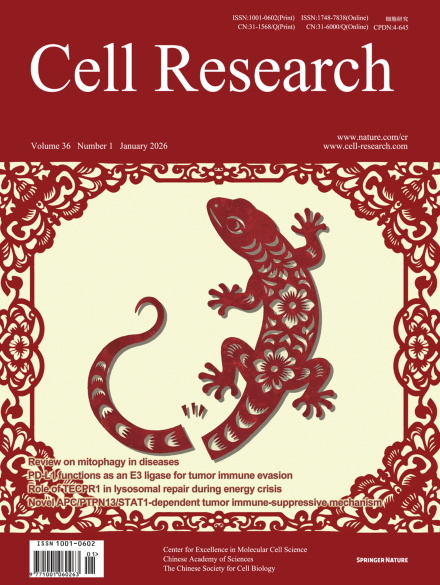
Volume 36, No 1, Jan 2026
ISSN: 1001-0602
EISSN: 1748-7838 2018
impact factor 17.848*
(Clarivate Analytics, 2019)
Volume 36 Issue 1, January 2026: 11-37 |
Mitophagy in the pathogenesis and management of disease
Qi Wang1,† , Yu Sun2,† , Terytty Yang Li2,* , Johan Auwerx1,*
1Laboratory of Integrative Systems Physiology, Interfaculty Institute of Bioengineering, École Polytechnique Fédérale de Lausanne, Lausanne, SwitzerlandMitophagy, an evolutionarily conserved quality-control process, selectively removes damaged mitochondria to maintain cellular homeostasis. Recent advances in our understanding of the molecular machinery underlying mitophagy — from receptors and stress-responsive triggers to lysosomal degradation — illustrate its key role in maintaining mitochondrial integrity and adapting mitochondrial function to ever-changing physiological demands. In this review, we outline the fundamental mechanisms of mitophagy and discuss how dysregulation of this pathway disrupts mitochondrial function and metabolic balance, driving a wide range of disorders, including neurodegenerative, cardiovascular, metabolic, and immune-related diseases, as well as cancer. We explore the dual role of mitophagy as both a disease driver and a therapeutic target, highlighting the efforts and challenges of translating mechanistic insights into precision therapies. Targeting mitophagy to restore mitochondrial homeostasis may be at the center of a large range of translational opportunities for improving human health.
https://doi.org/10.1038/s41422-025-01203-7
