
Advanced Search
Submit Manuscript Advanced Search
Submit Manuscript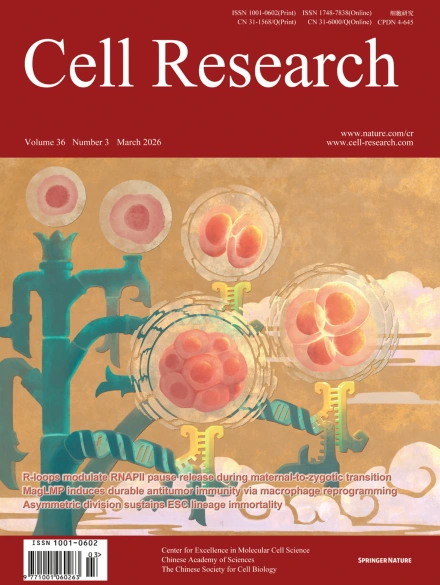
Volume 36, No 3, Mar 2026
ISSN: 1001-0602
EISSN: 1748-7838 2018
impact factor 17.848*
(Clarivate Analytics, 2019)
Volume 36 Issue 3, March 2026: 197-218 |
Dynamic magneto-mechanical force in lysosomes induces durable macrophage repolarization for antitumor immunity
up>1,2,3,4,†,* , Mengge Zheng5,† , Zhenyan Zhu6,† , Yajuan Zhang7,† , Peng Ning2,3,4 , Haotian Chen2,3,4 , Rui Gao2,3,4 , Chang Xu2,3,4 , Xueyan Wei2,3,4 , Yali Liu2,3,4 , Yingying Wang2,3,4 , Ruimei Zhou2,3,4 , Yuan Li2,3,4 , Zhenguang Li2,3,4 , Cheng Lv2,3,4 , Chen Liu8 , Junfang Xu5 , Zihan Guo1,2,3,4 , Zhixiang Hu1,2,3,4 , Lan Fang9 , Ke Wei10 , Mengying Feng10 , Changshi Zhou11,12 , Yunlang She1 , Weiyan Sun1 , Erzhen Chen2,3,4 , Gustavo R. Plaza13 , Bin He11,12 , Jason Miska14 , Weiwei Yang8,15,* , Yichao Tang6,* , Haipeng Liu5,* , Chang Chen1,* , Yu Cheng2,3,4
1Department of Thoracic Surgery, Shanghai Pulmonary Hospital, Tongji University School of Medicine, Shanghai, ChinaMechanical forces are emerging physical cues that regulate biochemical signals of immune cells for antitumor immunity. Owing to the lack of precise tools to impose intracellular forces, little is known about whether and how organelle-level forces trigger mechanotransduction for antitumor immunity. Here, we developed a magneto-mechanical force-triggered lysosomal membrane permeabilization (MagLMP) strategy to induce durable macrophage repolarization for in vivo applications. Self-assembled magnetic nanomotors are driven by rotational magnetic fields, facilitating dynamic damage to the lysosomal membrane by a finely tuned torque-induced vortex. Intriguingly, galectin 9 (Gal9) was found to be critical for sensing cyclic MagLMP, which dynamically activated AMP-activated protein kinase (AMPK), enhanced activation of nuclear factor kappa B (NF-κB), and induced metabolic alterations for sustained M1-like macrophage repolarization, followed by mounting of antitumor immunity. Through single-cell RNA sequencing of tumor tissues, as well as macrophage depletion-reconstitution models involving intratumoral transfer of Gal9-KO bone marrow-derived macrophages (BMDMs) and AMPK shRNA-transduced Gal9-KO BMDMs, we confirmed the Gal9-AMPK-NF-κB axis as the essential pathway by which MagLMP functions in antitumor therapy. In a mouse model of lung adenocarcinoma in situ, overall survival was extended after intravenous administration of nanomotors followed by cyclic MagLMP, and one third of mice survived for more than 300 days. Together, these results demonstrate an intracellular mechanical strategy that can dynamically manipulate innate immune responses in vivo, providing a tool for durable immunotherapy through organelle mechanotransduction.
https://doi.org/10.1038/s41422-025-01217-1
